Lumos
Lumos is currently experimental. There is no stable SDK yet, and the wire protocol may change between releases. We do not recommend using Lumos in production until a stable API is published.
Lumos is Kono's built-in Lua scripting engine. It allows you to modify incoming requests before they are dispatched to upstreams — without writing Go plugins or recompiling the gateway.
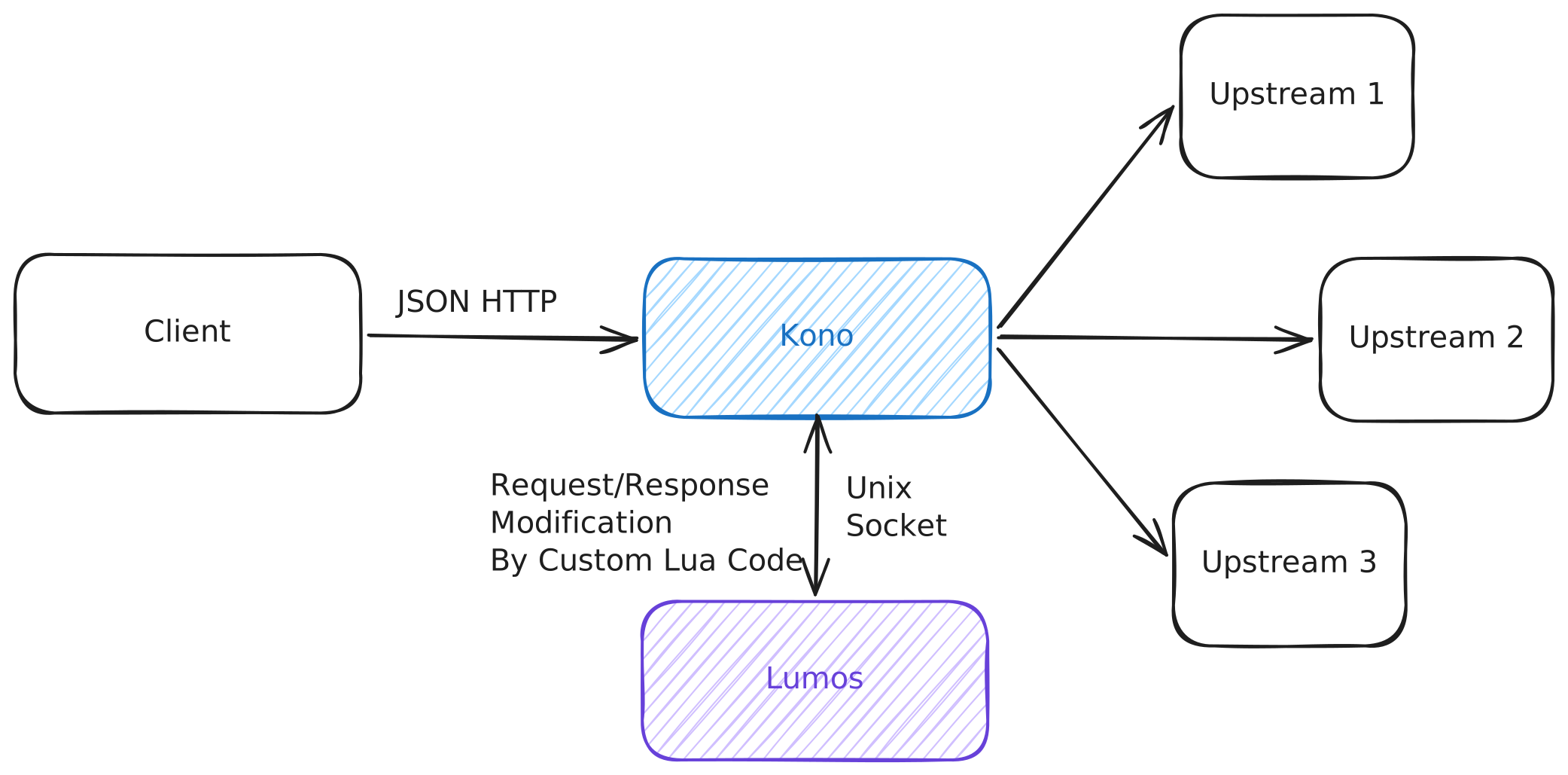
Lumos runs LuaJIT processes in the same container as the gateway. Communication happens over Unix sockets using a length-prefixed JSON protocol, which eliminates the network overhead of a sidecar approach.
How It Works
When a flow has scripts configured, Kono sends the incoming request to the Lumos worker over a Unix socket before dispatching to upstreams. The script processes the request and returns one of two actions:
continue— proceed with the request, optionally with modifications (method, path, query, headers)abort— reject the request immediately with a specified HTTP status code
Client → Kono → Lumos (Unix socket) → modified request → Upstreams
                       ↓ abort
                  HTTP error response
Configuration
flows:
  - path: /api/v1/users/{user_id}
    method: GET
    scripts:
      - source: file
        path: /etc/kono/scripts/auth.lua
    upstreams:
      - ...
| Field | Type | Description |
|---|---|---|
source | string | Must be file |
path | string | Absolute path to the Lua script file |
Multiple scripts can be defined per flow. They execute sequentially — if any script returns abort, execution stops.
Request Payload
The gateway sends the following JSON to the Lumos worker:
{
  "request_id": "01j...",
  "method": "GET",
  "path": "/api/v1/users/42",
  "query": "include=details",
  "headers": {
    "Authorization": [
      "Bearer ..."
    ],
    "X-Forwarded-For": [
      "1.2.3.4"
    ]
  },
  "body": null,
  "client_ip": "1.2.3.4",
  "script_path": "/etc/kono/scripts/auth.lua"
}
Response Format
The script must return a JSON response with an action field:
Continue (with optional modifications):
{
  "action": "continue",
  "method": "GET",
  "path": "/api/v1/users/42",
  "query": "include=details",
  "headers": {
    "X-User-Id": [
      "42"
    ],
    "Authorization": [
      "Bearer ..."
    ]
  }
}
Abort:
{
  "action": "abort",
  "http_status": 401,
  "error": "unauthorized"
}
Wire Protocol
Lumos uses a length-prefixed binary protocol over the Unix socket:
[4 bytes: uint32 big-endian message length][N bytes: JSON payload]
Both the request from Kono and the response from the Lumos worker follow this format. This guarantees that partial reads are detected correctly under load.
Use Cases
- Authentication — validate JWT tokens, check API keys, reject unauthorized requests
- Request enrichment — add headers based on request context (e.g. inject user ID from token claims)
- Path rewriting — dynamically modify the upstream path based on request parameters
- Conditional routing preparation — modify query params or headers to influence upstream behavior
Flow with Lumos looks like this: